
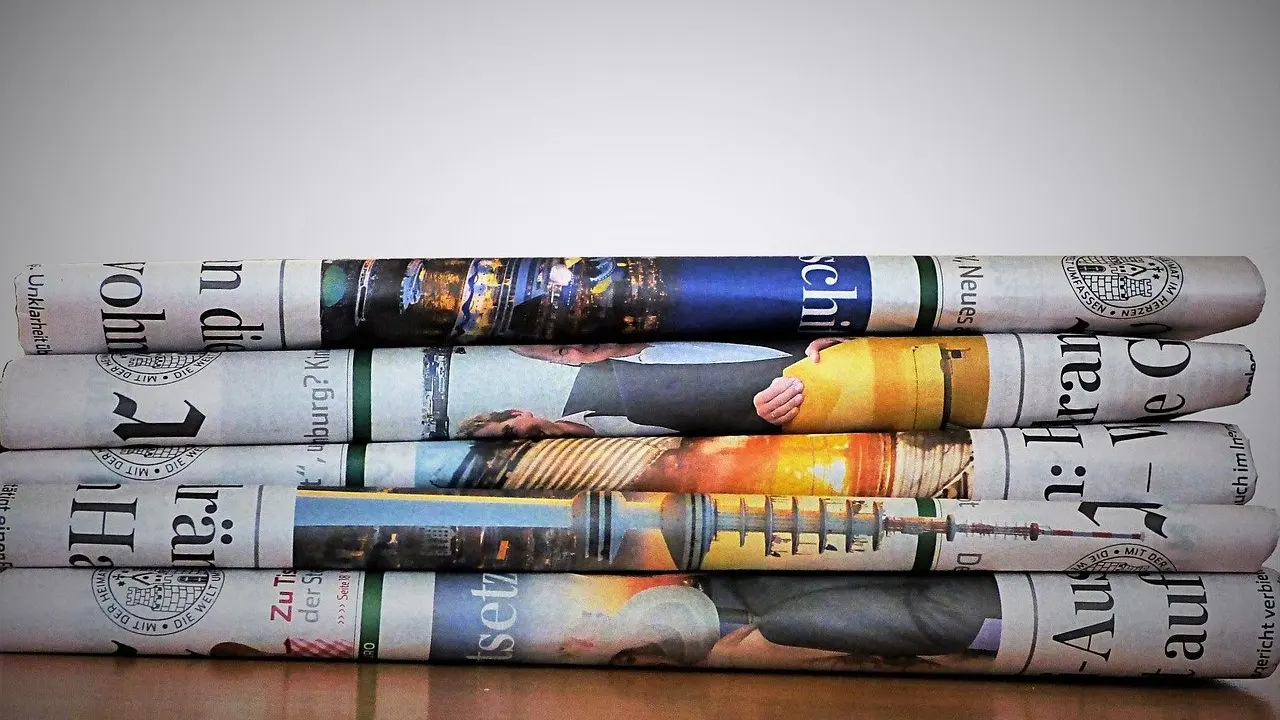
A reader spots a story signed only “staff” and asks whats a byline. It is the short line naming an article’s author, usually under the title; whether it is present, and who it names, helps you judge a news site.
A byline is one clue among several, so pair it with the wider checklist in how to check if a news website is credible.
What a byline is and where it appears
A byline is a short phrase or paragraph that names the author, sometimes with details relevant to the publication. Bylines introduce the author of a specific article, and they usually sit under the title or in a short author blurb at the end of the piece.
The byline belongs to the individual article, not to the publication as a whole. That is why a news site can carry many bylines on its home page while still publishing some items with no named author at all.

The sections below sort the usual misunderstandings from what the evidence supports, then look at print and online conventions, and then at how to use a byline when judging a news site.
Common byline misunderstandings
Most confusion comes from treating the byline as more, or less, than it is. The table separates five common assumptions from what the evidence supports.
| Common assumption | What is supported | Planning use |
|---|---|---|
| A byline is the same as an author bio. | The byline names the author of the article. A bylined article will usually also include a short bio that promotes the writer’s credentials. | Read both: the byline tells you who, the bio tells you what the writer claims as expertise. |
| Only staff journalists get bylines. | You do not have to be a journalist for a publication to achieve byline status; external contributors can earn one. | A byline alone does not show employment, so check how the publication describes its contributors. |
| Every article from a real news outlet is signed. | More generic news stories are often published under “staff” or with no byline at all. | Treat a missing byline as a prompt to look further, not as a verdict. |
| The named person wrote every word. | Brands and publications hire ghostwriters to create content without credit for that work. | A byline records credited authorship, not a full account of who produced the text. |
| A byline does nothing for the writer. | A byline helps freelancers establish credibility in their area of expertise and with their target audience. | Writers should treat each byline as a portfolio entry in their subject area. |
These points draw on Ndash’s guide to bylines and Pure Public Relations’ article on bylined articles.
Byline conventions in print and online
Print and the history of the term
In print, journalists regard a byline printed next to their story as a mark of honour. The convention is not ancient. A history of the term in The Smart Set notes that Hemingway’s 1926 novel uses “by-line”, which it describes as a word coined for an increasingly common practice in American newspapers and magazines. The same account says that after 1935 the New York Times increasingly identified the authors of the articles it published.
Signing is a house choice, not a universal rule. The Smart Set quotes The Economist’s statement of principles, “The Economist has no by-lines”, which is a deliberate policy of collective authorship rather than a lapse in transparency.
Online bylines
Online, the same line often does more work. Many online publications include a link through to the writer’s website, and the bio that accompanies a bylined article is often supplied by the writer. Editors usually copy and paste that bio to save time, so a writer who wants accurate credentials shown should supply a bio that is ready to publish.
For editors, the practical rule is consistency. Decide how the site handles named authors, “staff” items and contributors, and apply that rule everywhere, so readers learn what each form of credit means on your site. Where a story is built from a press statement, the credit also needs to show whose voice it is; the Press Release Example: A Step-By-Step Sample And Template For 2026 – Wrapports shows a document that speaks for an organisation rather than a named reporter.
Using a byline to judge a news site
A byline works as a credibility signal because it makes authorship visible. According to Pure Public Relations, publications do not let just anyone write for them, so bylines give an immediate sense of authority and credibility. That is a reasonable starting point, but it is a signal, not proof: it tells you where to look next.
What to check when you see a byline
- Is a named author present? A name gives you something concrete to search for, which a bare “staff” credit does not.
- Does the bio fit the subject? Bios exist to promote the writer’s credentials, so judge whether the stated expertise matches the topic of the article.
- Does the online byline link anywhere? A link to the writer’s own website or profile lets you test the claims in the bio.
- Is the outlet’s practice consistent? A publication that signs some stories and not others may have a clear policy; one that never explains its credits gives you less to go on.
Bylines and attribution
Attribution is the wider habit a byline belongs to. The ethics principle often cited from the Society of Professional Journalists is “Never plagiarize. Always attribute.”, and the same discussion calls for attributing by name to both the journalist and the organization. It adds that in digital journalism, attribution is incomplete without a link to the original. A site that credits its own authors and links to the work it relies on is showing the behaviour that codes of ethics ask for.
Absence has to be read with care. An unsigned piece from a publication with a stated no-byline policy differs from a generic unsigned story on a site that gives no explanation for it. Neither tells you whether the facts are right; both tell you how much accountability you can trace.
Writing and placing a byline
Writers and editors can apply the supported conventions in a few steps:
- Put the name where readers expect it. Place it under the title, or in a short author blurb at the end of the piece if the design calls for that.
- Keep the byline to the name and let the bio carry the credentials. The bio is the place that promotes the writer’s background, so the byline itself can stay short.
- Supply a bio that editors can paste unchanged. Because editors often copy the writer’s bio as provided, wording it carefully avoids later corrections.
- Link the name online where the platform allows. A link to the writer’s site or profile makes the credit more useful to readers.
For how the byline fits within a complete news story, with headline, lead and body, see the Newspaper Article Format: A Practical Guide to Structure, Style, and Examples (2026) – Wrapports.
Frequently asked questions
| Question | Answer |
|---|---|
| Can a guest writer or outside expert get a byline? | Yes. A writer does not need to be a journalist for the publication to earn a byline, and the article will usually carry a short bio explaining the writer’s credentials. |
| Why do some publications print no bylines? | It can be a house policy. The Economist, for example, states in its principles that it has no by-lines. Other outlets publish generic news stories under “staff” or with no name. |
| Is a ghostwriter named in the byline? | No. Ghostwriters create content for brands and publications without receiving credit, so the credited name may not be the person who drafted the text. |
| Where does the term “by-line” come from? | A history in The Smart Set points to Hemingway’s 1926 novel, which uses the word for a practice that was becoming common in American newspapers and magazines. |
| Does an online byline link anywhere? | Often it does. Many online publications link through to the writer’s website. |


